Books
From individually authored works to institutional publications, explore the breadth of CPG’s contributions to academic and policy-oriented literature.
Newest Publication
Series
Additional Publications
Newest Publication
Doing Justice: Procedure Law and Procedure Law Reform in Comparative Perspective
Henning Glaser (ed.)
Doing Justice: Procedure Law and Procedure Law Reform in Comparative Perspective explores key dimensions of procedural law, including arbitration, court organization, judicial independence, and administrative processes.
Bringing together eleven contributions from an international comparative perspective and covering legal systems of the United States, Germany, Israel, Thailand, Vietnam, China, Malaysia, Singapore, and the European Union, the book offers valuable insights into challenges of procedural law and procedural law reform and invites reflection on fundamental principles such as justice, efficiency, and legal certainty.
→ Check availability of this volume at Nomos Shop

Series
CPG Series of Comparative Constitutional Law, Politics and Governance
Presented are publications on issues like constitutional structures and institutions; normative orders and discourses; human rights in national and international perspectives; questions of and strategies for national and regional security, stability and peace; the political integration within the framework of regional organizations in particular the ASEAN, as well as questions of legal transfer and legal reform.
The target audience comprises scholars of international and constitutional law, political and regional studies, as well as practitioners in the areas of development cooperation and the rule of law dialogue.
Constitutionalism and Good Governance – Eastern and Western Perspectives (2014)
Dirk Ehlers, Henning Glaser, Kittisak Prokati (eds.)
The volume addresses current issues and developments of European and Asian constitutionalism in 19 articles pertaining to 12 different constitutional regimes including topics like the constitution making and the design of constitutions, the judicialization of politics and constitutional courts, human rights in national law and the constitutionalization of national law by regional human right regimes, different concepts of the rule of law, electoral law, federalism, the majority principle and democracy, and ASEAN.
Highlighting an interdisciplinary and comparative approach, the book resembles historical accounts, analytical studies, and political assessments by reputed legal and social science scholars including five (former) judges from the constitutional courts/council of Cambodia, Germany, Taiwan as well as the Supreme Administrative Court of Thailand.
→ Check availability of this volume at Nomos Shop.
Click the following picture for a book preview!

Norms, Interests and Values – Conflict and Consent in the Constitutional Basic Order (2015)
Henning Glaser (ed.)
All constitutional regimes necessarily rely on a certain underlying consensus (Robert Dahl). They all, however, include conflicts and mechanisms to cope with them. This ambiguity applies in particular to the normative fundament of the political system, the constitutional basic order.
If the balance between conflict and consent and its reproduction by relevant stakeholders and constitutional institutions including the judicial adjustment of the constitutional text by interpretation is disturbed here, or the constitutional basic order itself is threateningly assailed, constitutional crisis will emerge.
Thus, experiences of constitutional crisis, but also processes of constitution making and constitutional reform, mark those dimensions in which consent and conflict in the constitutional basic order are reflected most clearly and fundamentally.
The volume collects contributions dealing with constitutional regimes which are currently facing critical challenges of the underlying consent of the constitutional community (Belgium, Hungary, Italy, Malaysia, Taiwan, Turkey), with strategies of the constitutional order to cope with those challenges (Germany, Singapore), and with claimed cultural differences concerning the Western form to shape the constitutional basic order (“Asian Values” and constitution).
Contributors:
Maurice Adams (Public Law, Univ. Tilburg/Antwerpen, Netherlands/Belgium) | Noor Sulastry Yurni Binti Ahmad (Sociology, Univ. Malaya, Malaysia) | Robert Esser (Criminal Law, Univ. Passau, Germany) | Henning Glaser (Public Law, Thammasat Univ., Thailand) | Jau-Yuan Hwang (Public Law, National Taiwan Univ., Taiwan) | Sibel Inceoglu (Public Law, Bilgi Univ., Turkey) | Jörg Luther (Public Law, Eastern Piedmont Univ., Italy) | Yon Machmudi (Humanities, Univ. Indonesia, Indonesia) | Vicente Reyes (Leadership Studies, National Institute of Education, Singapore) | Charlene Tan (Leadership Studies, National Institute of Education, Singapore) | Li-ann Thio (Public Law, National Univ. Singapore, Singapore) | Gabor Attila Toth (Public Law, Univ. Debrecen, Hungary) | Fabian Wittreck (Public Law, Univ. Münster, Germany)
→ Check availability of this volume at Nomos Shop.
Click the following picture for a book preview!

Constitutional Jurisprudence – Function, Impact and Challenges (2016)
Henning Glaser (ed.)
After the Continental-European type of specialised constitutional courts has globally largely prevailed over the past two decades (at least beyond the Anglo-Saxon world), constitutional courts increasingly decided questions with far-reaching political consequences in various political settings. In this respect, a general tendency towards the judicialization of politics is embodied particularly clearly in the institution of constitutional courts.
Correspondingly, role and performance of constitutional courts are increasingly challenged in political debate in a range of political settings and became one of the most interesting topics in recent academic discourses on constitutional theory. Despite their common roots in a few models these courts vary widely in their role within the constitutional system, their functions and their effective performance.
Against this background the contributions collected in this volume address – among others – questions such as the constitutionalization of the legal system and the increasing politicalization of constitutional courts.
The contributions refer to the constitutional systems of Cambodia, Croatia, Germany Indonesia, Japan, Pakistan, Poland, Spain, South Korea, Thailand and Vietnam. Practice-oriented perspectives are provided by the contributions of incumbent or former constitutional court justices among the authors (from Cambodia, Croatia, and Poland).
Contributors:
Slavica Banic (Richterin, Verfassungsgericht, Kroatien), Byung-Song Cho (Öffentliches Recht, Cheongju Univ., Südkorea), Jong-ik Chon (Öffentliches Recht, Seoul National Univ., Südkorea), Ingwer Ebsen (Öffentliches Recht, Univ. Frankfurt a.M., Deutschland), Robert Esser (Deutsches, Europäisches und Internationales Strafrecht, Univ. Passau, Deutschland), Yasuo Hasebe (Öffentliches Recht, Tokyo Univ., Japan), Matthias Jestaedt (Öffentliches Recht, Univ. Freiburg, Deutschland), Bartosz Makowicz (Öffentliches Recht, Europa Univ. Viadrina, Deutschland), Van Quang Nguyen (Öffentliches Recht, Hanoi Law University, Vietnam), Javier Garcia Roca (Öffentliches Recht, Complutense Univ. Madrid, Spanien), Osama Siddique (Verfassungsrecht, Lahore Univ. of Management Sciences, Pakistan), Son Soubert (Privy Councillor to His Majesty the King of Cambodia, Kambodscha), Heru Susetyo (Öffentliches Recht, Univ. Indonesia, Indonesien), Miroslaw Wyrzykowski (Öffentliches Recht, Univ. Warschau, Polen), Jiunn-rong Yeh (Öffentliches Recht, National Taiwan Univ., Taiwan)
→ Check availability of this volume at Nomos Shop.
Click the following picture for a book preview!

Talking to the Enemy – Deradicalization and Disengagement of Terrorists (2017)
Henning Glaser (ed.)
As a collected volume, ‘Talking to the Enemy’ focuses on various aspects of the communicative dimension of counter-terrorism and its marginal conditions.
In its first part, the book features eight articles providing a variety of perspectives on Western as well as Asian efforts in countering potentially violent extremism. Besides more theoretical approaches, they offer practical insights from the coal face of counter-terrorism, especially in the field of disengagement, deradicalization and rehabilitation.
The second part is made up of a longer essay breaking down the effects of the fundamental post-9/11 trends in counter-terrorism on single strategies of how to engage with the adversary in form of de-radicalization, counter-terrorism and counter-insurgency.
A third part rounds off the volume with additional material including an interview on the Islamic State and its impact on geopolitics with a former chief intelligence advisor to the Indian government.
The book addresses those generally interested in countering radicalization, terrorism, counter-insurgency, conflict and IR/security studies as well as particular communicative techniques and the politics of counter-terrorism from different regional angles.
→ Check availability of this volume at Nomos Shop.
Click the following picture for a book preview!

State and Religion – Between Conflict and Cooperation (2020)
Dirk Ehlers/ Henning Glaser (ed.)
The relationship between the normative order of political communities and the place religion occupies within them has been one of the recurring questions since the beginning of civilization. This anthology addresses this question in 21 chapters. From the perspectives of philosophy, theology, politics, and particularly legal science, leading authors examine both fundamental issues and specific countries, including Germany, Italy, Croatia, Poland, Switzerland, Spain, Mexico, the United States, China, India, Japan, Singapore, and Taiwan. One of the central questions explored is the role of religion under the conditions of secular statehood. The chapters delve into various aspects of this complex relationship, including the historical, philosophical, legal, and political dimensions, and offer diverse perspectives and insights into the topic.
→ Check the availability of this volume at Nomos Shop.
Click the following picture for a book preview!

Additional Publications
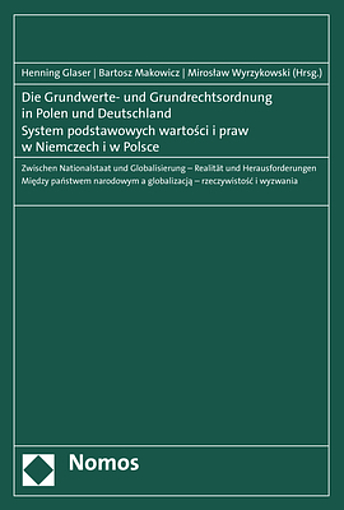
Die Grundwerte- und Grundrechtsordnung in Polen und Deutschland | System podstawowych wartosci i praw w Niemczech i w Polsce
Henning Glaser, Prof. Dr. Bartosz Makowicz, Prof. Dr. Miroslaw Wyrzykowski (ed.)
Zwischen Nationalstaat und Globalisierung – Realität und Herausforderungen | Miedzy panstwem narodowym a globalizacja – rzeczywistosc i wyzwania
2019, ISBN 978-3-8487-0171-1
This comparative constitutional work is dedicated to the systems of fundamental rights in Poland and Germany and is divided into two main parts. The first part of the volume contains an extensive study of the structure of the systems of fundamental rights in both countries, including their significance for the respective constitutional order, and their historical, cultural, and political foundations in the context of an Ius Publicum Europaeum. The second part offers a series of individual investigations from academia and practice, including contributions from former and current judges of the constitutional courts of both countries, as well as the European Court of Justice. Key topics addressed include current challenges for the systems of fundamental rights in the
balance between freedom and security, the European dimension of fundamental rights protection, and the status of fundamental rights in a globalized world.
This bilingual anthology provides readers with in-depth and multifaceted analyses of the systems of fundamental rights in Poland and Germany, along with rich comparative references. It offers a comprehensive understanding of the constitutional foundations and developments related to fundamental rights in both countries, promoting a deeper knowledge of comparative constitutional law.
→ Check the availability of this volume at Nomos Shop.
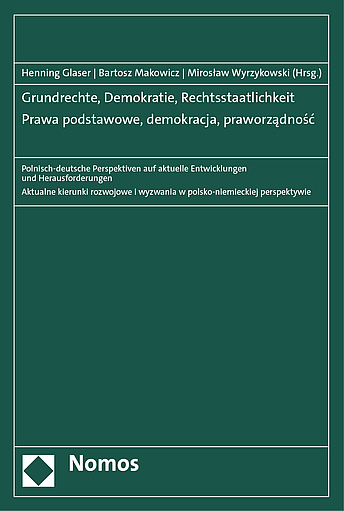
Grundrechte, Demokratie, Rechtsstaatlichkeit | Prawa podstawowe, demokracja, praworządność
Henning Glaser, Prof. Dr. Bartosz Makowicz, Prof. Dr. Miroslaw Wyrzykowski, MEP (ed.)
Polnisch-deutsche Perspektiven auf aktuelle Entwicklungen und Herausforderungen | Aktualne kierunki rozwojowe i wyzwania w polsko-niemieckiej perspektywie
2022, ISBN 978-3-8487-9042-5
This bilingual anthology, published in German and Polish, consists of ten contributions by renowned constitutional law scholars and judges. It addresses fundamental questions of German and Polish constitutional law, with a particular focus on constitutional values such as fundamental rights, the rule of law, and democracy. A common thread running through many of the contributions is the increasing threats to the normative integrity the European constitutional state is currently facing, both in Germany and Poland. Covered are in particular current developments in Poland which raise questions related to European law, particularly regarding the adherence to common European constitutional values. The anthology provides valuable insights into the constitutional frameworks of both countries and highlights the challenges and issues surrounding constitutional values in contemporary Europe. It offers a platform for scholarly analysis and discourse on key topics in German and Polish constitutional law, fostering a deeper understanding of the legal and political dimensions at play
→ Check the availability of this volume at Nomos Shop.
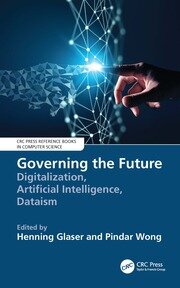
Governing the Future: Digitalization, Artificial Intelligence, Dataism (2025)
Henning Glaser, Pindar Wong (eds.)
The boundary to the future begins today, and this collection of essays highlights the many complex issues that tomorrow could bring – from fundamentally transforming how we see ourselves and live our lives; to who else gets to do so, when and on what terms. Governing the Future: Digitalization, Artificial Intelligence, Dataism brings together leading scholars and practitioners to examine the technology-driven transformation that is deeply shaping our world.
The interdisciplinary volume explores the impacts, challenges, opportunities, and regulatory frameworks of the unfolding revolution defining our era. Spanning 12 chapters, the book offers insights from a broad range of diverse perspectives on this civilizational shift including philosophy, cultural studies, international law, sociology, and
economics.
→ Check availability of this volume at Taylor & Francis Group.